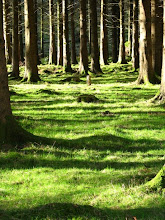
“Cad a dhéanfaimid feasta gan adhmad? Tá deireadh na gcoillte ar lár.”
The famous lines from an unknown 19th century poet lamenting the loss of Ireland’s great oak forests came to mind yesterday when reading through various reports of the World climate change talks in Bali.
The sentiments of the poem were that Britain had denuded Ireland of its forests and its greatest resources thus bringing the country to its knees.
It is a familiar and perennial feature of the divisions of power throughout the centuries – the manner in which the powerful exploit the weak by robbing them of their resources – both natural and human.
As you read this column this morning, the likelihood is that an agreement has been reached between the 190 countries participating in the crucial talks in the Indonesian resort. But don’t let the fact that there are so many countries participating or that fact that it’s under the auspices of the United Nations fool you into thinking that it’s a family of nations kind of thing. The debate is about the relationship of the powerful to the weak – and particularly about their respective responsibilities to the others with which they share this globe. And has often happened under the blinkered administration that has held power there since 2000, the focus has fallen unremittingly on the United States.
The purpose of the talks in Bali have been to reach agreement on new measures to combat global warming that will take effect once the Kyoto Agreement comes to an end in 2012. Until the middle of this decade, there were a handful of powerful countries in the awkward squad, who were unprepared to meet Kyoto commitments and targets; who also refused to set targets and timetables for reductions (on the basis that if others weren’t doing it; it would hurt their economies). But little by little, that number has been whittled down so that the refuseniks can be counted on the fingers of one hand. They are primarily the US; and then Canada and Japan. Of course, China (developing at a frightening rate) is also a huge problem but at least it is now beginning to talk the talk. Between them the US and China are responsible for about 50% of all CO2 emissions. Both need to act – if they don’t they could make the planet uninhabitable within a century.
The fault-lines at Bali for the past fortnight has been the refusal of the US to accept targets and timetables and instead opt for countries setting voluntary targets (ie a complete copu-out). The EU has demanded that the final text include a specific commitment that developed nations must their emissions by 25-40% by 2020, a massive task. And so incensed was the EU by the refusal of the US to engage that it threatened to boycott the US-organised conference involving the world’s biggest polluters next month.
"The United States in particular is behaving like passengers in first class in a jumbo jet, thinking a catastrophe in economy class won't affect them," environmentalist Tony Juniper was quoted as saying in the New York Times. "If we go down, we go down together, and the United States needs to realize that very quickly."
Some people have been lulled into the fiction that Kyoto is the panacea. In fact, Kyoto (agreed in 1997 but which only began in February 2005) set very modest targets indeed for reduction of carbon dioxide – only 5% below 1990 levels for developed countries. Even here in Ireland, we got a massive derogation – we were allowed to increase our carbon emissions by 13% (and in 2005, our emissions were already 25% above our 1990 levels). Even the ‘greening’ of Government will mean we won’t meet our Kyoto commitments.
The Government has argued that Ireland was a ‘developing’ country in that time, and needed to catch up with our European neighbours who were decades of us.
That’s the argument that has been used by poorer countries in Bali where ‘climate justice’ has become a buzz word. Countries in what we used call the ‘third world’ and developing economies like India and China argue that it’s all very well for the industrialised west to call for reducing emissions but by doing that millions of people will be trapped in poverty because they can’t access electricity; they can’t build factories; they can’t increasingly benefit from machinery and vehicles that run on petrol.
It’s true that the sacrifice in advanced countries like Europe need to be massive – a 60%-80% drop in carbon emissions by 2050, on the other hand, it would be tempting disaster to allow developing countries to have a free hand in repeating the mistakes and the waste when playing catch-up.
That’s where two vital mechanisms play their part. One is joint implementation where countries which have developed advanced and efficient power plants (like Germany) invest in other countries (like Russia, Bulgaria etc) who have noxious power plants and get carbon credits in exchange. The other is the clean development mechanism. Here a developing country is encouraged to use alternatives like solar, windpower and hydropower. If a rich country comes in and supplies the technology, it will get carbon credits for doing so.
And back to “cad a dhéanfaimid feasta gan admad?” I was reminded of it because one of the innovations is that countries with rain forests (vital lungs that help cool the planet) like Brazil, Costa Rica and Papua New Guinea are given incentives to retain them. And in developed countries too, the idea of afforestation is an important one.
If you look at our own carbon budget, creating new forests (to absorb carbon) is the biggest component of Ireland’s blueprint. If it does go to plan, one of the beneficial outcomes will be that the great forests that Ireland once had will be restored.
This is my column from this morning's Irish Examiner
Showing posts with label climate change. Show all posts
Showing posts with label climate change. Show all posts
Saturday, December 15, 2007


Wednesday, June 13, 2007
INSIDE POLITICS - GREEN MEETING

It's just after 3pm and there are maybe 300 Greens at the crucial meeting that will decide its future. It's a horrible day in Dublin, unrelenting rain, some of it heavy. Will that dampen the Greens, the most ideologically driven party of them all? Hardly. I'd say as the hours wear on, the bulk of the Dublin membership will descend on the Mansion House.
Last night, the look of relief and of achievement was etched on the faces of the party's leadership - and even Ciaran Cuffe, who was perceived as the most wary of FF, said he was delighted with the deal.
But with the Greens its bottom-up democracy. And it just took a couple of minutes of cogitation to realise that this was not in the bag.
There is a minority in the party who don't want to see it deal with FF, come hell or high water. There are other minorities too for whom there can be no compromise on Shannon, or on incineration, or on colocation, or on the motorwarys, or on other issues.
Certainly, the leaked details that the Times did so well to get this morning was damaging. It focused on what the Greens had failed to secure (Shannon, the M3, colocation, Tanaiste) rather than the gains the party had made.
More details kind of filtered out this morning that showed that the Greens have secured some big ticket concessions on the environment and climate change, plus a couple of eye-catching promises on medical cards for young children, those with intellecutal disabilities, plus the securing of funding for the centres who use ABA methods for autistic children.
However, will it be enought to win over delegates. You must remember that there are still many 'fundies' in the Greens as well as the more pragmatic and realistic 'realos'.
And for the Greens to go into Government, they will need to secure a 66% mandates. That's a huge ask by any reckoning.
Talking to Greens today, many think it's delicately balanced and will depend on the turn-out. The more who arrive, the better chance it has of succeeding. But already there's doubts about whether or not it's enough to sway enough.
And there are also rumours circulating that Trevor Sargent may offer to step down as leader tonight. He said he would not lead the Greens into a Government with Fianna Fail. That's just about to happen. There's also a sense that the party membership may try to encourage him to stay.
We are all on tenterhooks!
Subscribe to:
Posts (Atom)